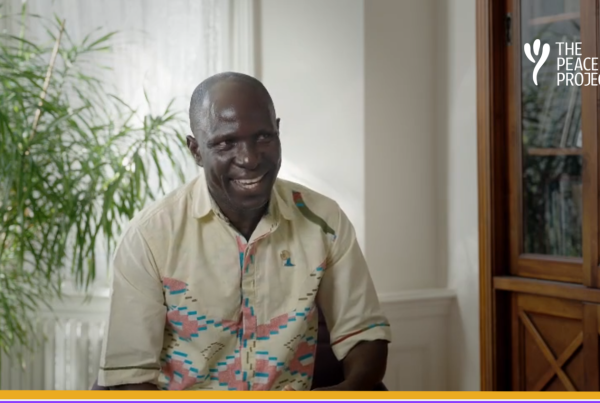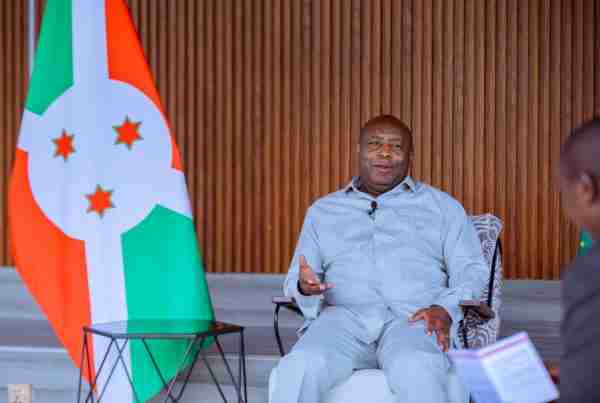

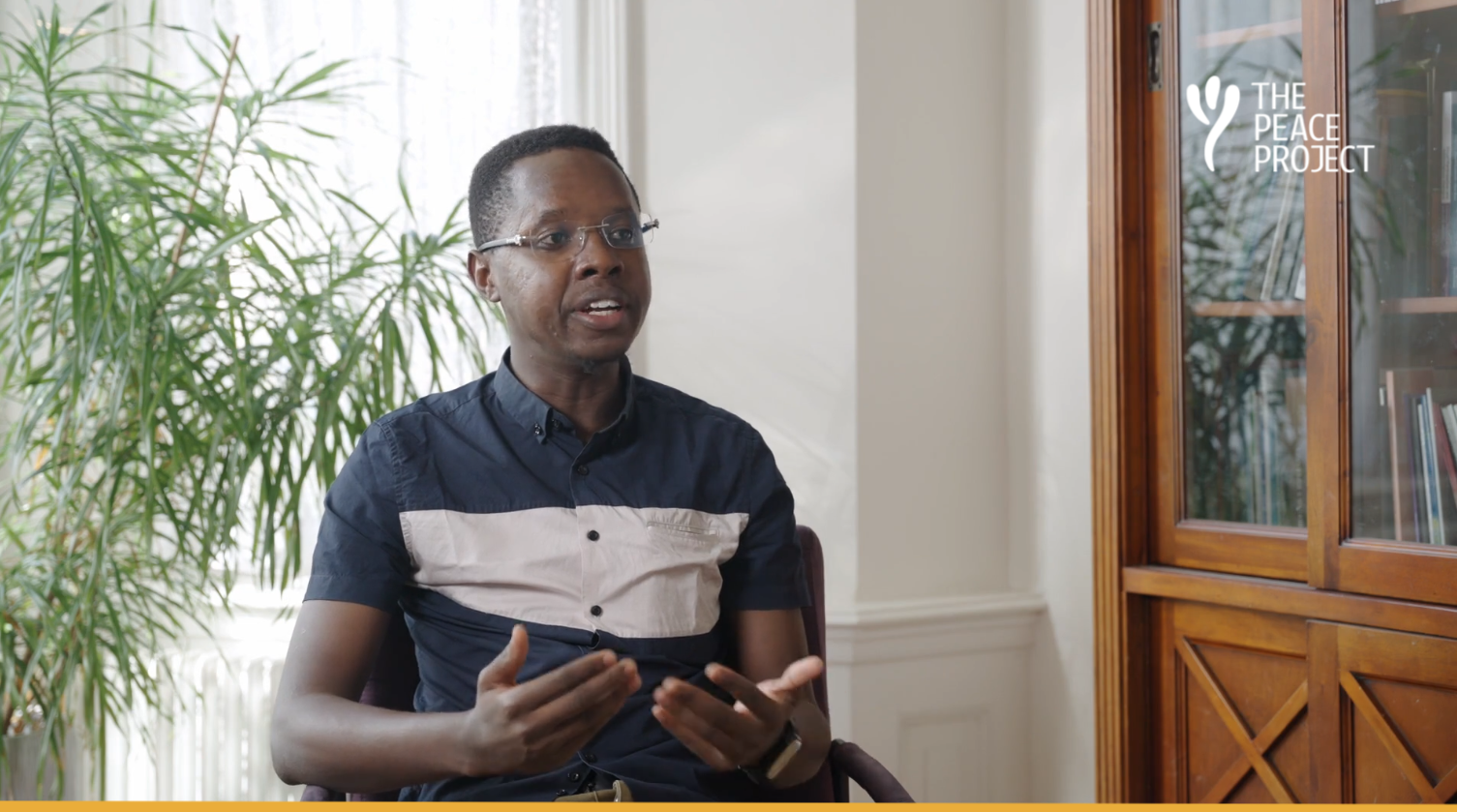
Héritier Muzungu grew up in the heart of Burundi, in a country navigating decades of instability and structural hardship. Today, as The Peace Project network coordinator for Burundi, he brings both personal experience and a deep commitment to locally led peacebuilding to his work — connecting seven partner organisations and the communities they serve.
A childhood in the centre of the country
Héritier Muzungu is The Peace Project network coordinator for Burundi. He was born and raised in Mutanaro, a province in the geographic centre of the country — now part of the larger Gitega province, which serves as Burundi’s administrative capital. He grew up like most Burundian children, he says: primary school, then the seminary, where he was briefly on a path to becoming a priest. He did not make it. But his childhood was, by his own account, relatively calm — he was born after many periods of acute instability.
He got to go to school. Not every child in Burundi does. “Many Burundian children don’t get that chance,” he says. “Because of poverty, because of lack of opportunities, because of financial hardship.” It is not something he takes for granted.
A small country carrying heavy burdens
Burundi is a landlocked country of roughly twelve million people. Without direct access to the sea, it depends on routes through neighbouring states for strategic goods and services — a logistical challenge with real consequences for daily life. It shares a border with the Democratic Republic of Congo, where ongoing instability in the east has ripple effects across the region. Poverty is structural. Access to education remains unequal.
One of the most persistent sources of tension concerns land. “Land in Africa is everything for a typical Burundian family,” Héritier says. Access becomes especially fraught in contexts where refugees and returnees are navigating overlapping claims. “Those confrontations can escalate — and that has an impact on peace.”
There is also what Héritier describes as a generational dimension to tension: the weight of unresolved history, passed down without adequate mechanisms for addressing it. “There are no mechanisms to deal with the past,” he explains. “And then sometimes you see confrontations between generations.” Inequalities in access to resources and assets compound this further.
These are not abstract dynamics for Héritier. His own family has navigated land disputes — and resolved them through dialogue, through community mechanisms, through people sitting together and finding a way forward. It is a telling detail: the approach The Peace Project is built on, is not foreign to Burundi. It already exists in the communities themselves.
Working from the inside out
The Peace Project’s approach in Burundi starts not with solutions, but with understanding.
“It’s not about the project. It’s about the community we serve.”
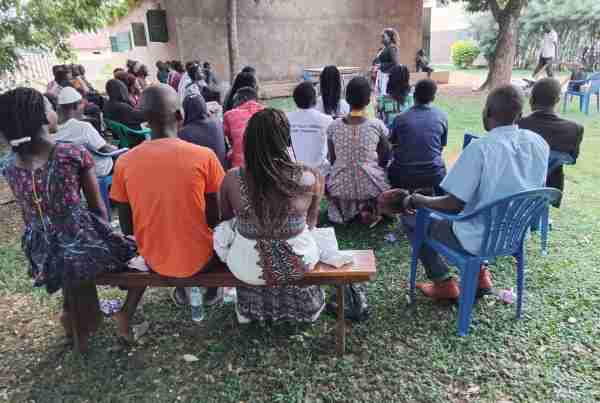
That means mapping existing community mechanisms, identifying entry points, and listening before designing. The network brings together seven partner organisations in total — three international and four national. At the local level, four national partners are at the core of community work: one focused on healing and reconciliation, one bringing digital approaches and youth engagement, one working with faith-based communities, and one working with women and youth — recognising that they are often at the forefront of peacebuilding, while also being among those most affected by community tensions.
“We don’t enter the community with a solution. We enter the community with the willingness to understand their needs — and then to involve them in the solution generation. The solution is within the community.”
Bringing together people from communities in tension is, as Héritier acknowledges, not straightforward. It is a gradual process, led by partners who have been present in these communities for years and carry the relationships and trust needed to open those spaces. “Step by step, we end up getting them there — to sit together and talk about the issues.”
The Peace Project also builds in something Héritier values: the ability to adapt. If an approach is not working, it gets changed. Community feedback shapes what comes next.
Connecting the dots
As network coordinator, Héritier’s role is not to direct, but to facilitate. He describes it in his own terms: “I like to use the word troubleshooter. It’s like an engine with moving parts — you need to make sure the engine keeps moving.”
That means keeping all seven partner organisations connected and on track, while giving each the space to bring their own expertise and community knowledge. Plans need to be aligned without imposing uniformity. And communities need to remain at the centre — not as recipients, but as active participants shaping the process.
“I ensure that the plans are connected and that the partners are on track — but we don’t lose the focus on the communities. We give the floor to the communities and receive their feedback.”
What drew Héritier to The Peace Project was this philosophy. After years of contributing to peacebuilding in Burundi from a creative perspective, he found an approach here that felt different from traditional project management through consortia. Working in a network, without a single lead organisation, means partners operate on the same level — and communities are seen not as beneficiaries, but as participants.
“The philosophy of the Peace Project is that the solutions come from within. Working alongside the communities and partners, we can help the community reach an agreement — a kind of contract around cohabitation and social cohesion.”
A vision for Burundi
When asked what he hopes for his country, Héritier is clear.
He wants young people at the table — not as the subjects of programmes designed by others, but as decision-makers in their own right. “We keep talking about opportunities for youth, but the programmes for youth are often led by people who are not the youth. I really want to see that change.” He wants women able to enjoy their rights fully. And in the longer term, he hopes for a Burundi free from violence.
“The solution is within the community.”