
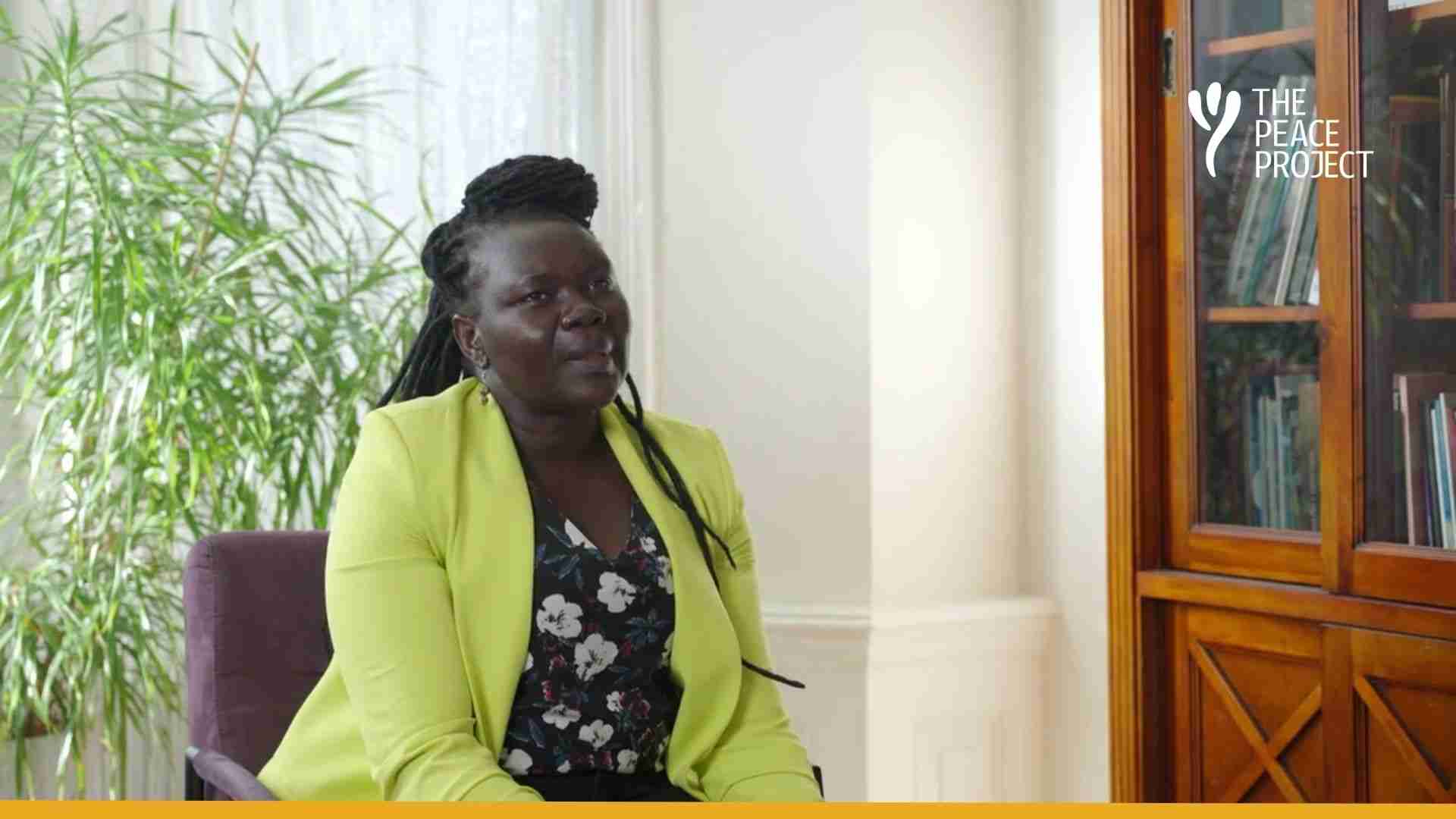
Rabecca Moriku has spent most of her life navigating the consequences of conflict in South Sudan — first as a child, and now as The Peace Project network coordinator for South Sudan. She knows what it means to grow up far from home, and to return to a country still marked by instability and division. That personal experience shapes how she approaches her work with The Peace Project every day.
Growing up away from home
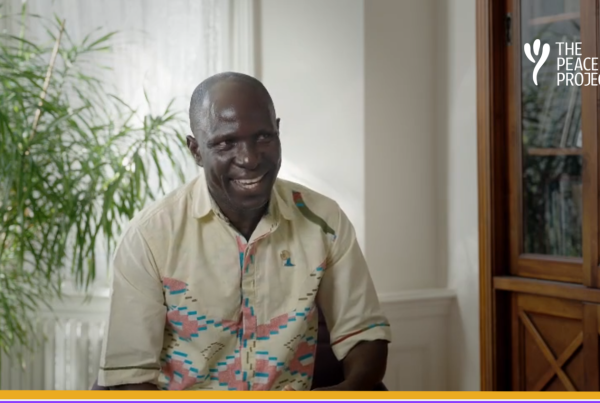
Rabecca Moriku is The Peace Project network coordinator for South Sudan. She knows the country she works in not just professionally, but in her bones. Born in what would become South Sudan, conflict forced her family across the border into Uganda. She spent her childhood as a refugee in the north of Uganda, in schools and clinics that ran on humanitarian aid.
“You don’t have all the opportunities that you would have as a normal child in your own country,” she says.
“You go to refugee schools, you go to health facilities that are supported by humanitarian aid actors, which are very basic. And of course you get food from humanitarian assistance — and there are not many opportunities for refugee children like for other children who would grow up in their own country.”
Rabecca returned to South Sudan in 2008, after the Comprehensive Peace Agreement was signed. She had just finished her degree. She came back to vote. “I wanted a state that I would call home. I was very determined to go back to South Sudan and exercise my constitutional right to vote for an independent South Sudan.” That vote came in 2011. The youngest country in the world was born.
A fragile independence
Three years later, South Sudan collapsed back into conflict. A political split at the top — a power struggle between leaders from different ethnic groups — cascaded downward through communities already shaped by loyalty, scarcity, and mistrust. The social fabric, as Rabecca puts it, was tampered with.
“I love to challenge the narrative when people say it is a conflict between two tribes,” she says firmly. “It wasn’t. It was just two political leaders who are coming from two different ethnic groups who disagreed on power sharing modalities and then ended up fighting. But because they come from these two different communities, it trickled down; youth and communities get easily manipulated because of the way the South Sudanese community is organised.”
The consequences hardened into something structural. Communities that had coexisted began to see each other as enemies. Intercommunal violence flared around land, water, and cattle. Even initiatives to get communities to give up their weapons became impossible to implement because no community trusted that the other would follow suit.
“Each time the government thinks of an initiative to disarm a community, it becomes very difficult,” she explains. “Because there is already the narrative that you cannot start with us, because they are the enemy and we must be armed to be able to defend ourselves from them.” It is not a situation that can be solved from the outside. Rabecca is clear about that, and it is precisely what drew her to The Peace Project.
Working from the inside out
“Peace is something that is very personal for me,” she says, “because I didn’t get to experience it during my childhood. I got robbed of that because of conflict and violence that led to me being displaced and being a refugee.”
That personal history shapes how she understands the work. The violence in South Sudan, she argues, is never just about violence — it runs deeper, into the structures and stories that hold communities apart. Who gets a seat at the table. Whether women and young people have any real say. The broken relationships between neighbours who learned to see each other as threats. And the stories people tell about each other hardened over decades of conflict into something that makes every new tension more explosive than it needs to be.
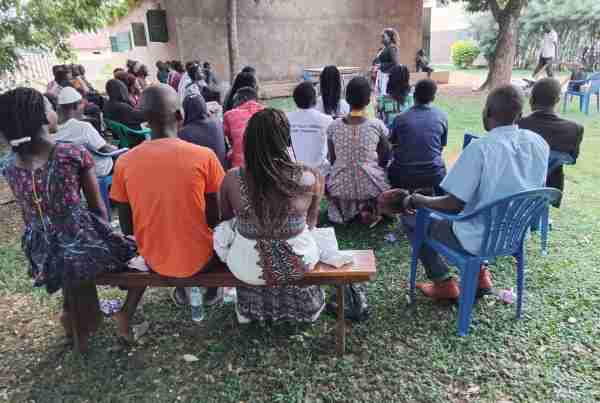
“The issues in South Sudan are related to structural issues linked to systems and policies,” she says. “It has to do with representation, access to resources, the percentage of women in decision-making positions, how many youth have their voices heard. This can be changed at different levels; first at community level, ensuring that community structures are inclusive of men, women, young people, and there are spaces for them to air out issues that affect them and make decisions around those issues.”
“Outsiders will not be able to achieve that. But if we empower South Sudanese themselves and give them the platform to be able to air out these issues and advocate and lobby for changes — then maybe there can be changes at different levels: local, sub-national, national, but also regional and international.”
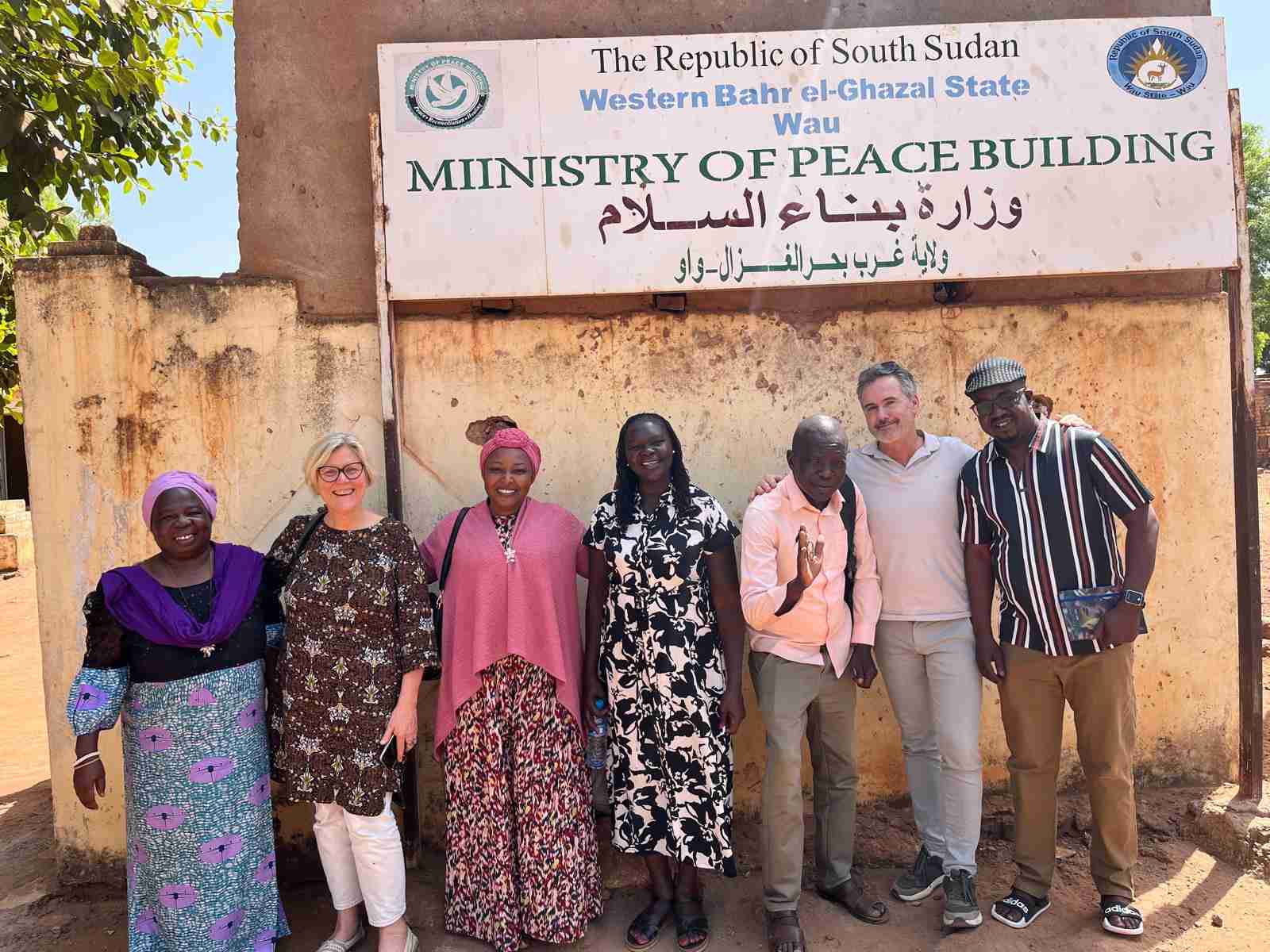
As network coordinator, Rabecca’s role is to create exactly that space. Not to decide, but to open doors. “I don’t decide for the partners we work with. I don’t decide for communities what they should be working on. I facilitate processes; working with the partners, working with individuals that we have identified, to be able to set their own goals and develop their own plans based on a sound understanding of the issues that they want to work on and change.”
A vision for the future
Rabecca’s children are four and six years old. They live in Uganda at the moment. It is the same displacement she lived as a child — passed now, unwillingly, to the next generation. She sees them every six to eight weeks.
“The situation has robbed me of having quality time with my children. I live in South Sudan because that’s where I work,” she says. “But my children are in Uganda, because of the unpredictable situation in South Sudan and to have access to quality education.”
When she talks about what she is working toward, it is not abstract. “I want a South Sudan where I don’t have to send my children out of the country to go to school or to access medical services. A home where young people have opportunities, women have access to decision-making spaces, and different ethnic communities accept each other celebrating diversity, but knowing that they are South Sudanese, and that when they work together, they can achieve greater things.”
It is a vision shaped by everything she has lived through and by everyone she does not want to see go through the same.
“I do not want — if anything — for children, women, the elderly, to go through what my generation has gone through.”
That is why The Peace Project exists. And why people like Rabecca are at the centre of it.