
How The Peace Project in Uganda is Working with Local Actors to Promote Women’s Land Rights and Peace
A collaborative piece written by The Peace Project Network- Uganda
International Women’s Day 2026 provides an opportunity for us to reflect on the actions and progress towards women and girls rights and justice. The Peace Project (TPP) in Uganda stands as a powerful example of local actors themselves, through dialogue, inclusion, and adaptive learning, leading in transforming harmful norms, empowering women, and building lasting peace in communities.
On this International Women’s Day, The Peace Project story especially in Northern Uganda and West Nile regions in Uganda reminds the world that: “rights, justice, action for ALL women and girls” is not just a theme, but a lived reality. When women realize their rights, communities realize their peace.
The process flows from women’s land rights, through the role of local actors, and shows how these actions have resulted in peace outcomes across Uganda. At the core of the project implementation are guiding approaches like locally-led, adaptive learning and conflict sensitivity. They have been key in implementing activities like dialogues, sensitization, trauma healing, capacity strengthening, policy influencing, etc.
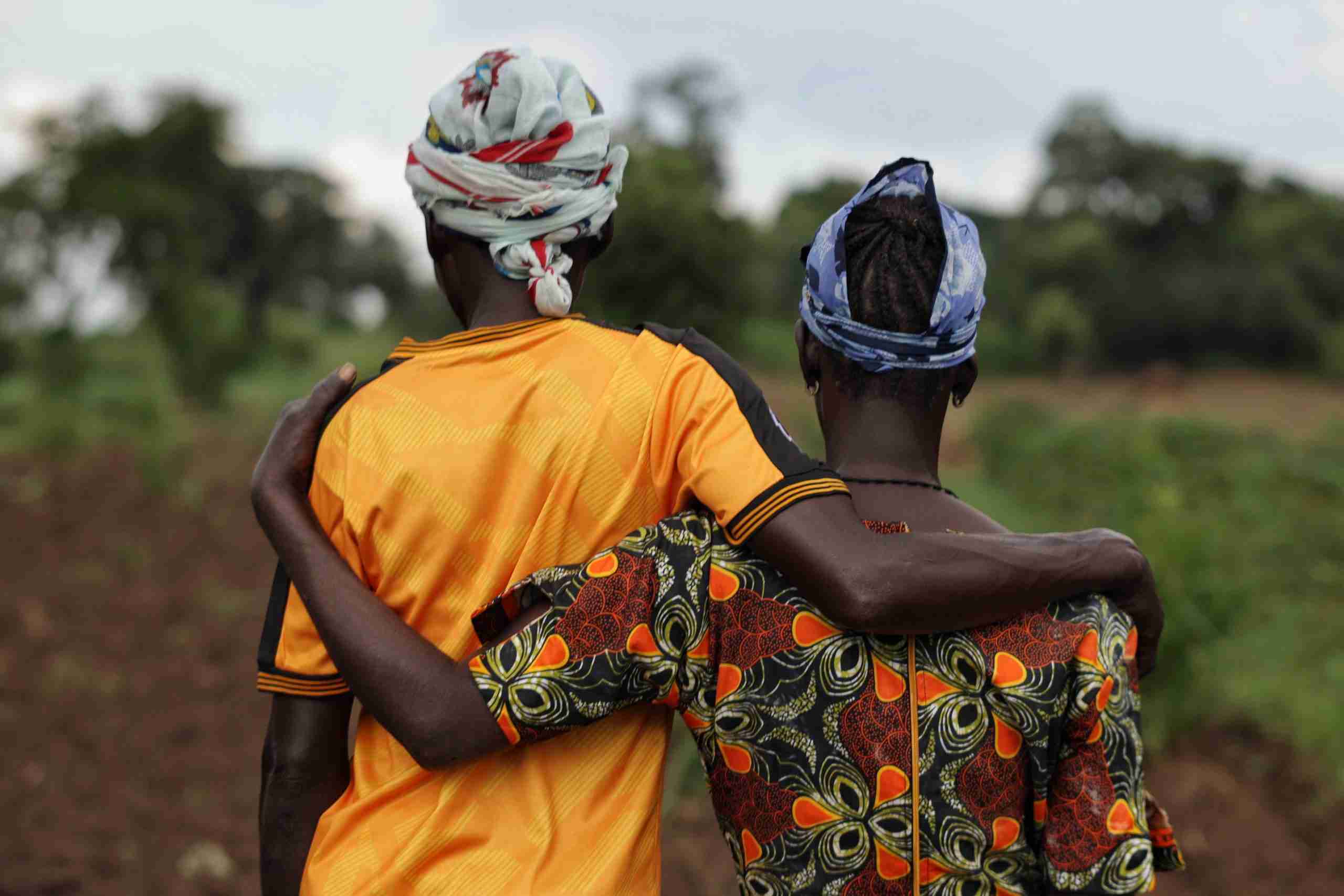
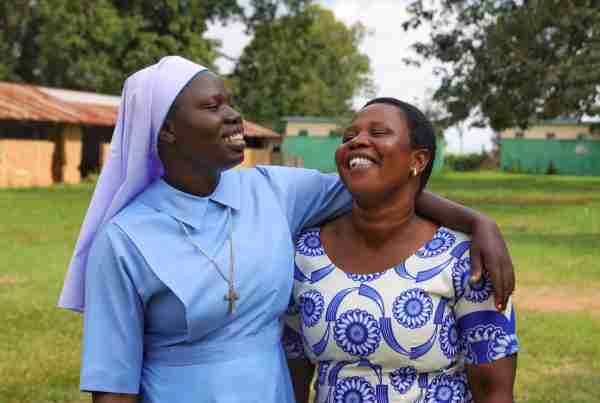
Acayo Esther (left), 53, and Auma Dorine (right), 52, pictured holding each other in reconcilliation on the land they fought for over 20 years.
Land, Identity, and the Struggle for Women’s Rights
In Uganda, land is more than just a property. It is heritage, livelihood, and identity. Yet for generations, women in cultural context settings dominant in places like northern and West Nile parts of Uganda remain largely excluded from ownership, control and decision-making. This exclusion fuels poverty, domestic violence, and mistrust. Land disputes often escalate into community clashes, weakening social cohesion and leaving groups like women and girls particularly vulnerable.
The Peace Project recognized that without addressing women’s land rights, peace would remain fragile. Working with partners such as ARLPI, MCJL, Capacitar, JPD-Gulu, RACI, MIFUMI, and THP–Uganda, the project set out to work with local actors – cultural leaders, women, youth, and local governments, religious institutions etc to transform harmful norms, and appreciate the need and open space for women’s voices in land governance. By doing so, communities are not only advancing women land rights but also laying the foundation for justice and peace.
Cultural Leaders Opening Doors
Cultural leaders hold immense influence in Ugandan communities, often serving as custodians of tradition and arbitrators in disputes. Yet their methods have not always fostered fairness – with accusations of “gender blind” practices. Such practices tend to be more common in customary land governance systems – dominant in Northern Uganda and West Nile regions.
In Omoro Town Council, a cultural leader Okello Michael once faced community complaints for punitive judgments in land disputes. He admits that his gender-biased rulings often deepened divisions rather than resolving them – characterized by incidences of attacks and revenge. After the Alternative Dispute Resolution (ADR) landrights training by ARLPI in early 2025, Michael embraced mediation. Within months, he successfully mediated four cases of land and domestic conflict, earning respect and trust from his community. Today, he is engaged in transforming his fellow cultural leaders to embrace ADR and women land rights in his community.
His transformation illustrates how equipping local leaders with new tools can shift entire communities from punishment to dialogue – creating space for women to realize their rights and strengthening community harmony.
Women Claiming Their Place
For decades, women in Uganda were sidelined in matters of land and leadership – especially in traditional settings. The Peace Project is changing that narrative. In places like Palabek Ogili (Lamwo district), women and other local leaders are working with police officers to conduct community dialogues on women land rights, fostering social cohesion and peace. The dialogues have not only enabled community actors to appreciate the value of fostering women land rights but also bridged the gap between law enforcement and civilians, fostered trust where suspicion once prevailed and strengthen confidence of women to actively participate in leadership and decision making processes.
In Lamwo district, for the first time two women (trained and now Peace Committee members) contested in party primary elections for members of parliament in 2025. Although they did not eventually win, the community noted that this was a good indicator of women self-confidence and breaking barriers in women political participation. Their candidacies were not isolated events but part of a broader participation where women are increasingly taking lead as leaders and in decision-making processes.
These experiences have demonstrated how working with local actors can build trust, create pathways for women’s voices to be heard and respected, build a more inclusive governance structures and shape communities.
Youth as Catalysts for Change
Uganda’s youth are proving that advocacy for women’s land rights, peace and alternative narratives is not confined to traditional spaces. For example, after a training by MCJL, young Muslim women formed the Peace Catalysts Advocacy Group WhatsApp platform, bridging divides between different Muslim sects, sharing peace messages and countering hate speech that once fueled division. Today, the youth catalysts are instrumental in fostering social cohesion – including mobilizing through social media platforms.
In Yumbe district, when hate speech incited violence over pork sales erupted in late 2025, they were key in mobilizing fellow youth, security, religious leaders into stakeholder meeting that prevented further escalation of violence and damage. As a result, the process provided safer spaces for dialogue, reduced sectarian tensions, contributed to dismantling of harmful narratives, and strengthened collaboration across religious lines. In places like Amuru, the Youth Peace Catalysts (under RACI) have moved a step further to initiate joint income generating activities as a way of addressing the proximate causes of violence among youth in their community.
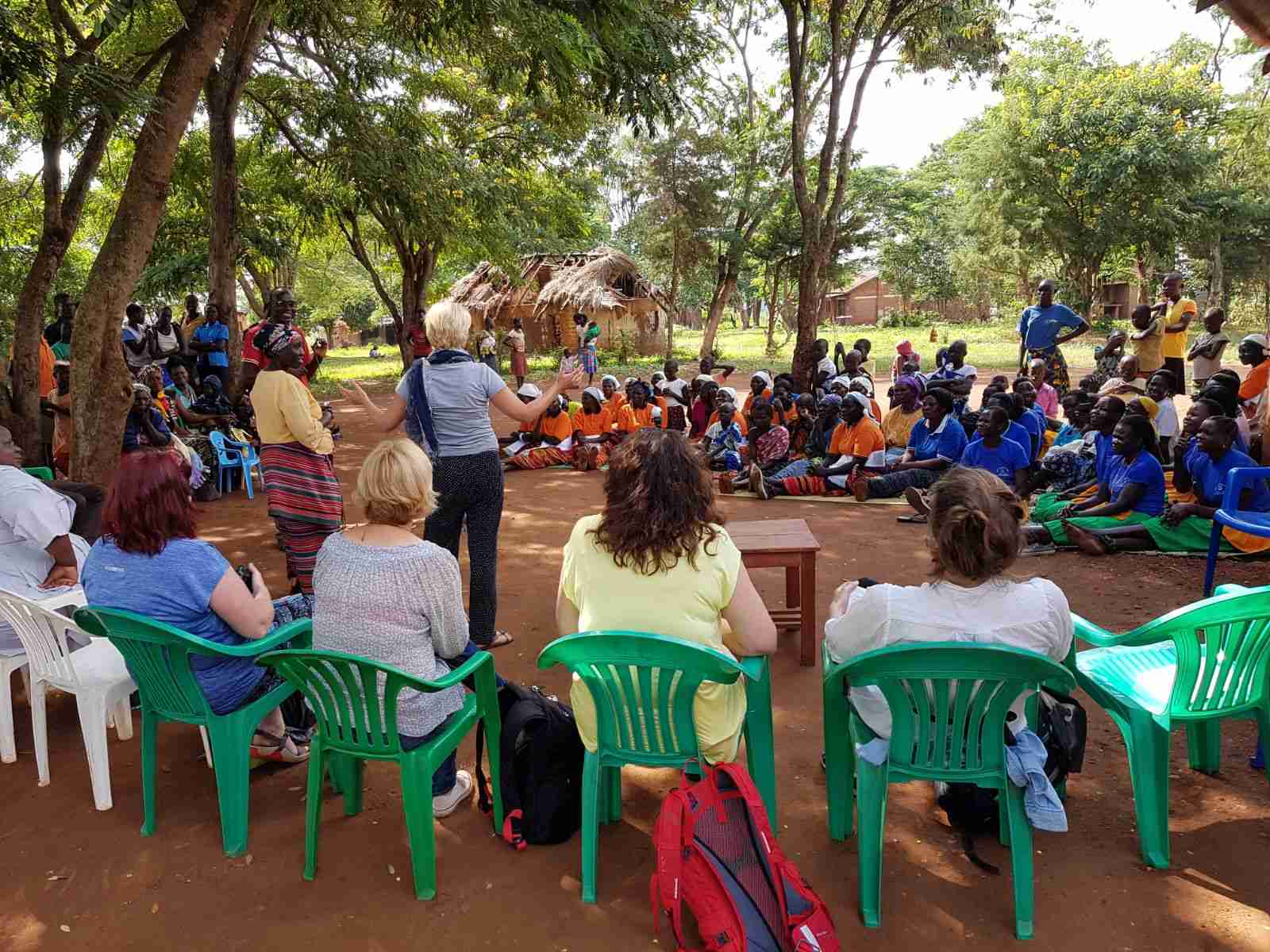
Capacitar training.
Families Learning New Ways
In Nebbi district, The Peace Project dialogues have not only yielded in promoting women’s land rights but local actors also created a phrase of “peace begins at home”. As one of strategies to addressing the post-war challenge of trauma, Capacitar conducts therapies that are helping fathers engage their families in decision-making and trauma healing.
Juliet’s household, once torn apart by alcoholism and violence, transformed after counseling and nonviolent communication training. Her husband now supports her, and their children attend school regularly. This story demonstrated that when families learn to communicate and support one another at household level, women gain the confidence to gain a feeling of their rights. It is also demonstrating how women’s empowerment in the home is directly linked to stronger, more peaceful communities, showing how justice and rights within families ripple outward to society.
Communities Building Structures for Justice
In Nwoya District, The Hunger Project–Uganda introduced the Vision, Commitment, and Action (VCA) approach, leading to the formation of 33 village peace committees. These committees provide trusted, locally accessible spaces where disputes can be resolved before escalating into violence.
In late 2025, in Koyo Cell (Nwoya district), two families that had been fighting over a piece of land for many years agreed to sit down with the Village Peace Committee, instead of resorting to violence.
Apiyo Filda, now a peace committee member, reflected:
“Before the Peace Project, I believed fighting was the only way to defend what belonged to me. But when in my presence, the two families resolved their conflict peacefully, I realised that peace is possible. Today, I believe in talking, listening and building peace. This change has given me hope not only for myself but for our whole village. We now know that peaceful solutions make families and communities stronger.”
These committees show how working with local actors –women, youth, cultural leaders, and local councils creates sustainable structures for justice. In Koyo Cell, the process has resulted into now fewer violent confrontations, restored trust in community mediation, and a sharp decline in conflict over land.
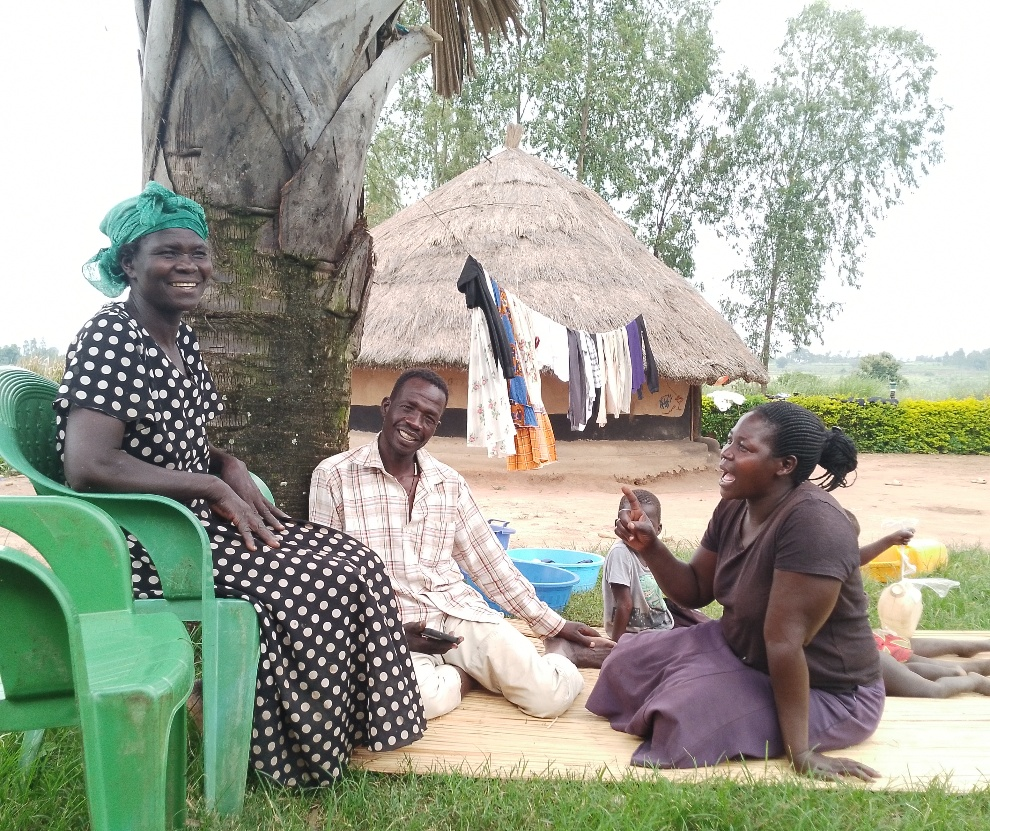
During a family dialogue in Nwoya district – Uganda. Photo credit: THP-Uganda.
Indicators of Change
In Northern Uganda and West Nile parts of Uganda, communicated point out that The Peace Project is realizing commendable progress. Women at community levels are actively participating in elections, leading committees, and gaining trust in key decision making roles. Local actors are engaging in joint peace actions – bridging gaps that once fueled mistrust. Young women and men are using digital platforms to counter harmful narratives and advocate for rights. Families are reporting improved communication and reduced domestic violence. Communities have institutionalized peace committees, providing accessible mechanisms for dispute resolution – and reluctantly realizing more social cohesion and peace.
Many of these indicators stem from efforts towards promoting women’s land rights – through locally-led approaches in promoting peace in communities. The Peace Project is continuing to be an inspiration to the world – not only in promoting women land rights but peace in general. It offers a model of locally led development, it signals the importance of inclusive policies/practices and adaptive learning, and it affirms the essential role of local actors in understanding the challenges and defining practical context-specific responses to sustainable peace. And the link is undeniable: when women are empowered, communities become more cohesive, resilient, and just. This is the living embodiment of rights, justice, action – for ALL women and girls.